
Ochrona przyrody >  Kampanie OTOP >  Via Baltica >  ENGLISH >  Augustow Bypass

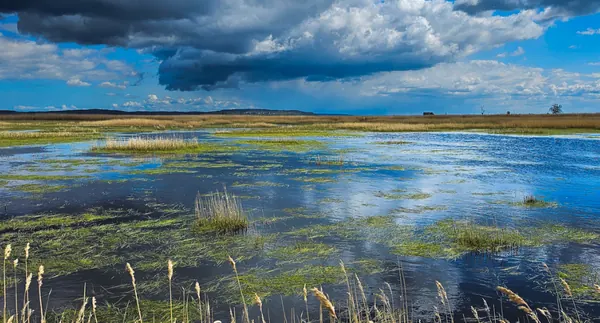
dolina_rospudy.jpg

Rospuda Valley, fot. Piotr Malczewski

Augustow Bypass

by Helen Byron and Małgorzata Górska

The possibility of a bypass for Augustow (a town with a population of about 30 000 people)on existing road number 8 to alleviate problems with heavy traffic through Augustowdates back to the early 1990s. At this time, the Polish Road Agency carried out an analysis of two main alternatives – one around Rospuda Valley and a second (with 4 variants) through the Valley. Based on this analysis the route through the Valley was chosen by regional authorities. The alternative around the Valley was rejected for social and economic reasons – as this route was longer it would require removal of more houses and purchase of larger number of privately owned parcels of land. The Valley route was subsequently included in spatial plans adopted by the relevant local authorities (Nowinka County, Augustow Town and Augustow County) in 1999-2000.  

In early 2004, the Polish Road Agency started detailed planning procedures to enable construction of the road on the Valley route. The project - a new 4-lane road of 17.1 km (ie 2 lanes in each direction) includes a 517m long bridge on concrete pillars through the mires in the Rospuda Valley.   6 km of the road including the bridge is within the Augustow Forest Natura 2000 site. 

Under EU nature law Natura 2000 sites must be protected and not allowed to deteriorate. In particular, when projects which may affect Natura 2000 sites are planned a rigorous analysis of potential impacts (known as ‘appropriate assessment’) on the Natura 2000 site must be carried out in advance and projects can only go ahead if they will not affect the integrity of the Natura 2000. If the assessment demonstrates that the project is likely to have an affect on Natura 2000 site integrity (eg by having an effect on the populations of key species for which the site has been designated) then the project can only go ahead in very limited circumstances. It must be demonstrated that there are no other less damaging alternative solutions to the project as planned (such as alternative routes), that the project is necessary for ‘imperative reasons of over-riding public interest’ (commonly referred to as IROPI) and that compensatory measures to offset the damage to the site will be implemented[1]. If these specific conditions are not fulfilled then any project consent granted will be in breach of EU law.

Because of very serious concerns that the planning for the project did not comply with the requirements of the EU nature laws, in early 2006 a coalition of Polish NGOs (consisting of OTOP – the Polish Society for the Protection of Birds, WWF Poland and the Polish Green Network supported by some other NGOs[2]) submitted a complaint to the European Commission. This provided evidence of the potential negative effects on the Augustow Primeval Forest Natura 2000 site and lack of proper consideration of alternative routes[3].   In particular, an NGO supporting public transport development has identified an alternative route which has not been properly investigated. 

As well as problems with the planning for Augustow Bypass this complaint also raised concerns about breaches of the EU nature laws in relation to six other road projects on or related to road number 8 - the then Polish Government’s preferred route for the Via Baltica corridor. These projects included the upgrade of 3 sections of existing roads and construction of the new Bypass of Wasilkow City all affecting Knyszyn Primeval Forest, one project cutting the Biebrza Valley, and a further project (in addition to Augustow Bypass) cutting Augustow Forest. 

European Commission and European Court of Justice
The European Commission (EC) investigated the case and, when it was unable to resolve the situation through informal contact with Poland, in December 2006 opened legal proceedings. It sent Poland a ‘first written warning’ about 8 road projects in NE Poland – new roads, bypasses or upgrades all linked to the Via Baltica Helsinki-Warsaw road corridor, on the basis that in authorising these projects, Poland breaches several provisions which aim to mitigate deterioration of nature sites of European importance[4].

Poland failed to provide a satisfactory response to the EC and, to the contrary, in February 2007 gave contractors the green light for clearing work for the Augustow and Wasilkow Bypasses. This prompted the EC to send Poland a ‘final written warning’ concerning the damage that will be done to primeval woodland and other natural habitats of European importance if construction of the two bypasses goes ahead. The EC stressed that it supports the upgrading of road infrastructure in Poland – including along the Helsinki-Warsaw road corridor– but it does not accept that the irreversible damage that will be caused by the bypasses is either necessary or justified. As clearing work was imminent, the Commission asked Poland to respond within one week. This was an unusual step reflecting how urgently the Commission was treating the matter – normally Member States are given 2 months to respond[5].

Unfortunately, despite this second warning Poland remained unmoved and construction work on the two projects started. Hence, in March 2007 the EC referred the case to the European Court of Justice (ECJ). The EC were so worried that Poland would damage Natura 2000 sites with the Augustow Bypass works, and proposed compensation measures linked to this project to be implemented in another Natura 2000 site, they took the unusual step of applying to the ECJ for an order requiring Poland to stop the imminent implementation of the compensation measures programme until the ECJ has had chance to consider the full case[6]. In April 2007, such a temporary order (effectively an injunction) was granted[7]. This was the first time such an order has been made to protect a Natura 2000 site from imminent damage by a development – a new precedent. 

Despite the strong actions of the EC and ECJ, in July 2007 it became clear that Poland still intended to start construction in Rospuda Valley in August - immediately after the end of the birds breeding season. Hence, on 30 July 2007 the Commission made an urgent application to the ECJ to order Poland not to start road construction in Rospuda Valley[8]. The situation was only resolved when Poland provided the ECJ with official confirmation that they would not undertake works inside the Augustow and

The case is now at the written procedure stage – which involves the EC and Poland, and also Latvia, Lithuania and Slovakia, who have got involved in the case to support Poland[9], are exchanging written documents. This stage is not public, the next public stage will be a hearing on the case at the ECJ

The European Parliament
The case has also gained a high profile at the European level due to the interest of Members of the European Parliament (MEPs). The first visit of MEPs to NE Poland to investigate the Via Baltica case was by members of the European Parliament’s (EP) Committee on Environment and took place in 2005 – a year after Poland joined the EU. After the Polish NGOs submitted a petition to the EP’s Petitions Committee in 2006, the committee agreed that the case is of European concern and decided to examine it in detail. A fact-finding mission to Poland took place in the summer of 2007 and resulted in September 2007 in adoption of a very strong report[10] critical of the Polish government. This MEP report recommended Poland to consider the alternative route for Via Baltica expressroad, urges the Polish authorities not to proceed with any construction or destruction in the Rospuda Valley or other protected areas, considers that EU funding should only be allocated to Via Baltica if the route is selected on the basis of Strategic Environmental Assessment and is in strict conformity with European Directives, and finally recommends that EU support should be made available for rail freight and passenger transport between Finland and the Baltic States and Warsaw.

The new Polish Government and the ‘Rospuda Round Table’
Following the change of Polish government in autumn 2007 and cancellation by a Polish court of one of the key planning consents (the environmental consent) for Augustow Bypass through Rospuda Valley, the new Environment Minister convened a round table stakeholder process to discuss the possibilities for solving the problems with Augustow Bypass/Rospuda Valley. In January –February 2008 three meetings were held bringing representatives of the Polish Road Agency, local/regional authorities, NGOs, local politicians, experts and the Ministers of Environment and Infrastructure together to discuss the Augustow Bypass issue.  

The Round Table agreed that the next step should be Environmental Impact Assessment (EIA) with ‘appropriate assessment’ (as required under the Habitats Directive for projects that might affect a Natura 2000 site) for Augustow Bypass considering three possible routes. One of these routes would bypass the Natura 2000 site completely, a second would cut only a small part of the Natura 2000 site and the third route is the Road Agency’s preferred route right through the mires in the Rospuda Valley section of the Natura 2000 site. The Polish authorities have just issued a tender[11] for this further assessment work to choose a company to be contracted The EIA with appropriate assessment is expected to be finished by the end of October 2008. Then the new environmental consent will be granted for the

Very worryingly, although it has been decided that the new assessments are required to decide the legal route of Augustow Bypass and the environmental consent for the current route through the mires in Rospuda Valley has been cancelled, construction works are still continuing on the sections of the Road Agency’s preferred route outside the Natura 2000 site. Therefore, the road could end up being completed right up to the boundaries on both sides of the Natura 2000, before a new decision is taken.

Other related road projects
Although the Augustow Bypass situation is relatively promising, the NGOs remain worried that the Polish authorities are still progressing other Via Baltica road projects related to road number 8 – the Polish authorities preferred route for the international Via Baltica corridor. For example, in early 2008 ground clearance works were carried out inside Knyszyn Forest Natura 2000 site for the planned Bialystok-Katrynka road upgrade project. Other road projects, while still currently at the planning (paper) stage, are being continuously developed towards implementation.
In total there are 11 Via Baltica road projects of concern at different stages of planning, including a proposed Bypass of Sztabin likely to affect Biebrza Marshes Natura 2000 site. What is urgently needed is for the Polish authorities to take a strategic decision on the best route for the entire Polish part of the Via Baltica corridor.

[1] Articles 6(3) and 6(4) of the Habitats Directive which apply to all Natura 2000 sites.
[2] NGO coalition website - http://www.viabalticainfo.org/-en-
[3] OTOP leaflet on Via Baltica – http://www.otop.org.pl/upload/30/00/00/07/55/viabaltica(1).pdf
[4]  Commission Press Release ‘Poland: Commission pursues legal action for violation of nature directives’, 12 December 2006, http://europa.eu/rapid/pressReleasesAction.do?reference=IP/06/1757&formaPoland officially warned over Via Baltica road plans’, 18 December 2006, http://www.birdlife.org/news/news/2006/12/via_baltica_win.html and NGO Press Release
[6] Commission Press Release ‘European Commission takes Poland to court to protect threatened wildlife habitats’, 21 March 2007, http://europa.eu/rapid/pressReleasesAction.do?reference=IP/07/369&format=HTML&aged=1&language=EN&guiLanguage=en and NGO Press Release  ‘Poland's reckless approach to natural treasure lands it in European Court of Justice’, 21 March 2007, http://www.birdlife.org/news/pr/2007/03/via_baltica_eu_court_justice.html
[7] ECJ Order available from http://curia.europa.eu/
[8] Commission Press Release ‘Commission asks the European Court of Justice to order Poland not to start road construction in Rospuda Valley’, 30July 2007,  http://europa.eu/rapid/pressReleasesAction.do?reference=IP/07/1191&format=HTML&aged=1&language=EN&guiLanguage=en and NGO Press Releases ‘European Commission takes last minute action to stop illegal expressway construction in Poland’, 30 July 2007, http://www.birdlife.org/news/pr/2007/07/via_baltica.html and ‘Environmental NGOs welcome halting of Polish expressway construction, but urge continued vigilance’, 2 August 2007, http://www.birdlife.org/news/pr/2007/07/via_baltica_poland.html
[9] ECJ Orders on the involvement of Latvia, Lithuania, Slovakia available from http://curia.europa.eu/
[10] http://www.europarl.europa.eu/meetdocs/2004_2009/documents/dt/677/677664/677664en.pdf
[11] http://www.gddkia.gov.pl/article/zamowienia_publiczne/do_progow_unijnych/index.php?pr25_x=1&pr25_menu=przetargi_pokaz&pr25_przetargi_range=&pr25_przetargi_type=&pr25_przetargi_law=&pr25_przetargi_id=7923&futix=-34969000#trjmp